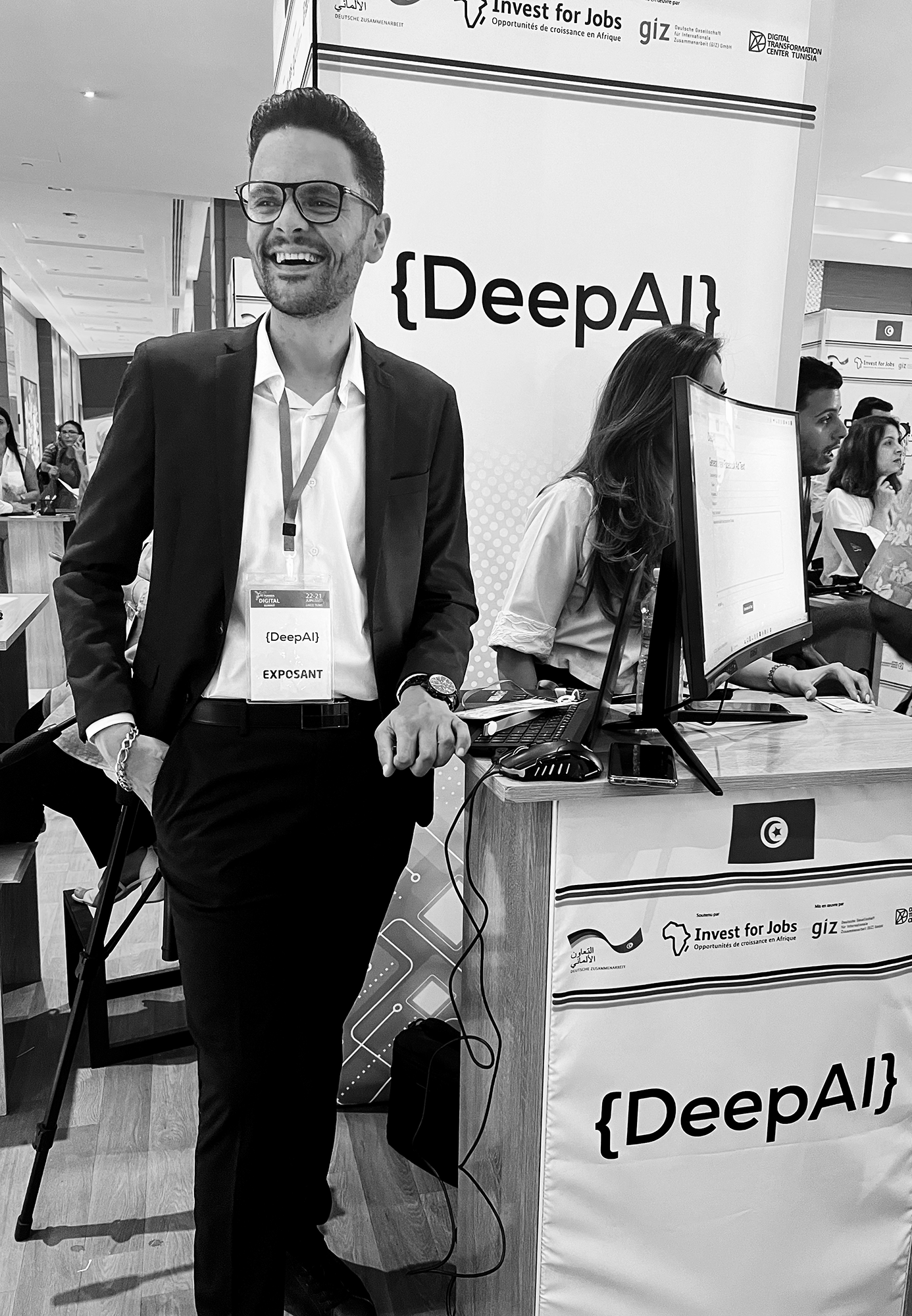
Builds AI systems that work in production, not just in research. 10+ years designing and deploying LLMs, Agentic pipelines, and NLP systems for teams running in production. Founded and scaled multiple technology ventures, led R&D teams, and shipped AI products that solved real business problems. Known for closing the gap between technical depth and commercial execution, from architecture decisions to go-to-market strategy.
Whether you need a strategy, a working system, or someone who can do both — here’s where to start.
Agent harness architecture
The orchestration loop, control flow, retry and escalation logic, and the decision of when an agent should stop. The layer that turns a model into a system.
Tool layers and MCP design
Tools scoped, described, and versioned so a model uses them correctly under pressure rather than plausibly under demonstration.
Skills architecture
Progressive disclosure and scoped capability. One skill, one job, loaded when relevant. Not one system prompt carrying the entire business.
Private and on-premise LLM deployment
Systems for organizations whose data cannot go to a third-party API. That constraint shapes the architecture from day one, not at the end.
Evaluation and observability
Scenario-based scoring against real cases, regression testing across model updates, tracing, and cost attribution. Knowing the system degraded before a customer tells you.
Adversarial testing and alignment
Prompt injection, jailbreak detection, permission boundary failures. The security problems that only appear once an agent can act.
I started in search in 2011, back when ranking a page was a matter of structure and patience. That work led into natural language processing, and NLP led into language models years before the category had a public name. I was building semantic search systems when the honest description was still statistics with good intentions.
In 2019 I founded DeepAI (Gov lable in 2023) and we built DeepCORE, a 4 billions large language model designed from the ground up rather than retrofitted from a consumer product. Not because it was fashionable. Because our clients had data that could not leave their building, and there was no other way to give them what they needed.
I have now watched this field mistake a demo for a system three separate times. Search did it. NLP did it. Agents are doing it right now, at a scale the previous two never reached.
The pattern is always the same. The capability arrives, the demos are extraordinary, everyone assumes the hard part is over, and then reality supplies the inputs nobody planned for. What separates the systems that survive is never the model. It is everything built around it.
That is the part I work on.
15
years in AI, ML, and SEO
16
Certifications
75
Clients worldwide
57
Projects
The Company
DeepAI. Built to push the boundary of what AI can do for business.
Founded 2019, state-labeled 2023. Where the consulting work becomes product.
DeepCORE and the DeepSearch Framework both started as client problems with no off-the-shelf answer and stayed as systems.
Today the focus is one thing: helping organizations extract real intelligence from data they are not allowed to send anywhere.
The Academy
DeepLearn Academy. Africa's first state-certified AI training center.
Launched in 2024. Based in Tunisia. Built for professionals and business owners who need to understand AI — not just read about it.
DeepLearn Academy is the only state-certified AI and machine learning training center on the continent. Programs run from foundational data science to advanced machine learning engineering, with hands-on curriculum designed for the real demands of the international market.
Every program comes with personalized support. Including placement assistance.
This is not another online course platform. It’s structured training with outcomes attached.
Teams teaching & coaching
Teaching
I hold Anthropic’s certification for teaching the AI Fluency Framework, and I am a Gemini Certified Faculty member and Google Certified Educator.
Building the academy curriculum forced a discipline that shows up in the consulting work. If you cannot break a capability into modules that each teach one thing, you do not understand it well enough to hand it to someone else. That applies to a training program and it applies to a client engineering team.
Every system I build comes with the enablement to own it. A system nobody internally understands is a dependency, not an asset.
Good to know
Every agent with tool access is an attack surface
A chatbot that gets manipulated gives a bad answer. An agent that gets manipulated takes an action.
Prompt injection is not a general concern about language models. It is the defining security problem of agentic systems, because the same context window carrying your instructions also carries whatever arrived from a document, a webpage, an email, or a tool response. The model cannot tell the difference. The architecture has to.
I reached Tier 5 on the OpenAI Platform, the maximum partner level, through contributions to the OpenAI Developers Program including red-teaming and alignment research. I contribute to Google’s AI Vulnerability Reward Program on prompt injection testing, jailbreak detection, and alignment issue analysis.
Finding these failures for the labs is not a credential I keep on a shelf. It is why I know where the systems I ship will be attacked.
Founded DeepAI in 2019
Built and deployed DeepCORE, a custom LLM
Launched DeepLearn Academy — Tunisia and Africa's first state-certified AI training center
Trained professionals across Tunisia, MENA, and international markets
The Blog
Cutting through the noise on AI, ML, and search.
Architecture decisions, failure post-mortems, and notes from production. Written for people shipping this, not for people reading about it.
If your agents work in the demo and fail in the field, that is the normal outcome
It is also fixable. I work with teams in three ways: a fixed-scope readiness audit, a full harness build, and ongoing operations for systems already running.